

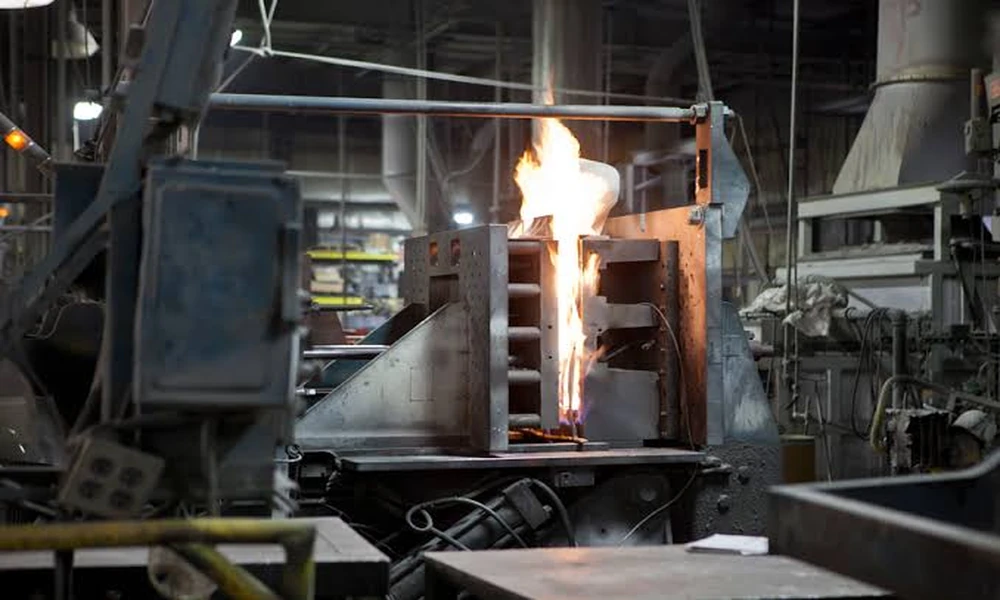
Aluminum casting is one of the most widely used manufacturing processes for producing complex, near-net-shape metal components at volumes that machining from solid stock cannot approach on a cost-per-part basis. The combination of aluminum’s light weight, excellent thermal and electrical conductivity, corrosion resistance, and castability makes aluminum casting the process of choice across automotive, aerospace, electronics, industrial machinery, and consumer products applications where design complexity, production volume, and the performance requirements of the finished component all factor into the manufacturing process selection.
What are the main aluminum casting processes?
Aluminum casting services from an established aluminum casting manufacturer span several distinct process technologies whose selection depends on the component’s geometry, the required dimensional tolerances, the surface finish specification, and the production volume:
- Aluminum die casting: The injection of molten aluminum under high pressure into a hardened steel die. Die casting produces components with excellent dimensional consistency, smooth surface finish, and thin wall sections that sand or permanent mold casting cannot achieve. The high tooling cost of die casting dies is offset by the low per-part cycle time and the consistency of high-volume production. An aluminum die casting manufacturer serves the automotive, electronics, and consumer products markets where high volumes and tight tolerances are the governing requirements
- Permanent mold aluminum castings: Poured gravity or low-pressure casting into reusable metal molds, producing components with better dimensional control and finer grain structure than sand castings but without the high injection pressure that die casting requires. Permanent mold is the preferred process for medium-complexity components at moderate volumes where the surface finish and structural integrity of die casting are needed but the production volume does not justify die casting tooling
- Sand casting: Molten aluminum poured into sand molds that are broken away after solidification. Sand casting offers the greatest geometric flexibility and the lowest tooling cost of the aluminum casting processes, making it the appropriate choice for large components, low production volumes, prototypes, and geometries that cannot be demoulded from permanent tooling
- Investment casting: Aluminum poured into ceramic shell molds produced from wax patterns, delivering the highest dimensional accuracy and surface finish of the casting processes for complex three-dimensional geometries. Investment casting is used for aerospace and defence components where the geometric complexity and the near-net-shape requirement justify the higher tooling and processing cost
What alloys does an aluminum casting company work with?
An established aluminum casting company works with a range of aluminum casting alloys whose selection reflects the mechanical, thermal, and corrosion resistance requirements of the application:
- A380 and A383: the most widely used die casting alloys, providing a balance of castability, strength, and machinability for general-purpose die casting applications in automotive, electronics, and industrial equipment
- A356 and A357: premium structural casting alloys used in aerospace, automotive, and structural applications where the combination of high strength, good ductility, and weldability is required. Both alloys achieve the full mechanical properties through heat treatment after casting
- 319 and 356 series: versatile alloys used in permanent mold and sand casting for automotive cylinder heads, transmission housings, and structural castings where moderate strength and good pressure tightness are required
- 2xx series (aluminum-copper): high-strength casting alloys for aerospace and defence structural components where maximum strength at elevated temperatures justifies the reduced castability and corrosion resistance of the copper-containing alloys
What quality standards apply to aluminum casting manufacturers?
Aluminum casting foundry operations that serve the automotive, aerospace, and defence markets operate within rigorous quality management frameworks that extend from the alloy chemistry control and mechanical property testing of the cast material to the dimensional inspection and non-destructive testing of finished components:
- IATF 16949: the automotive sector quality management standard that aluminum die casting companies and aluminum die casting manufacturers supplying automotive OEMs and Tier 1 suppliers must maintain
- AS9100: the aerospace quality management standard applicable to aluminum casting manufacturers supplying aerospace and defence structural components
- NADCAP: the National Aerospace and Defense Contractors Accreditation Program special process accreditations for heat treatment, non-destructive testing, and chemical processing that aerospace casting suppliers must hold
- ASTM standards: the applicable ASTM casting standards for the specific alloy and product form, which define the chemical composition limits, mechanical property requirements, and the inspection and testing methods that govern acceptance of the cast product
What is the advantage of sourcing aluminum castings from a USA-based manufacturer?
Sourcing aluminum casting services from a casting manufacturer with domestic USA manufacturing or a managed domestic supply chain provides the supply chain resilience, the regulatory compliance simplicity, and the communication and quality oversight that offshore casting sourcing cannot match for quality-critical applications. The reduction in lead time, the elimination of import duties, and the ease of supplier qualification audits are additional practical advantages that many US manufacturers weigh against the cost differential when evaluating domestic versus offshore casting sourcing.
